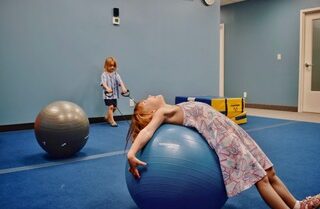
What Is Occupational Therapy?
At its heart, paediatric occupational therapy is about helping children navigate their world with growing independence. For a newborn, that means the earliest skills, such as suckling or lifting their head. As they grow, it expands into movement, crawling, eating solids, dressing and, importantly, play. Play isn’t just fun, it’s how kids practice and coordinate their motor skills while learning to interact with everything around them. When motor development lags, a child’s ability to explore, engage, and learn from their environment gets harder too.
Beyond these foundational skills, we want every child to genuinely thrive, in friendships, sports, games, school, and eventually work. An occupational therapist’s role is to help close any gaps between where a child is and where they’re capable of getting to.
Motor skills are only part of the picture, though. Children also need to develop emotionally. Children must learn to process sensory input and regulate their responses to the world around them. When there’s a delay in motor skills, or a struggle with sensory processing, it doesn’t stay contained to one area, it ripples into a child’s broader ability to explore, learn, and manage daily life.
Signs Your Child Might Benefit from Occupational Therapy
Delayed milestones — If your one-year-old isn’t crawling yet, or your two-year-old isn’t walking steadily, these can be early signs of a delay. Because so much learning comes from moving through and interacting with the world, catching these delays early matters. Occupational therapy helps kids strengthen their movement and exploration skills, which are the foundation for all early-learning.
Trouble with gross motor skills — Difficulty with balance, strength, endurance, or coordination can affect everyday movement, walking, running, hopping, and more. Left unaddressed, these gaps can later hold kids back from sports or recess play with friends, which can quietly chip away at self-esteem. Working on these skills early, with the right support, helps head that off.
Trouble with fine motor skills — Kids who struggle here often find everyday tasks like drawing, using scissors, or handling utensils harder than their peers. Fine motor delays frequently show up in handwriting too, which can become an unexpected barrier to learning and self-expression in the classroom.
Sensory processing challenges — If your child tends to overreact to touch, taste, sound, or smell, this is a common sign of sensory processing difficulty. Occupational therapy uses targeted exercises to help build tolerance and ease around these sensory experiences.
How We Help
When a child is facing challenges in any of these areas, it can affect their independence in daily life, often in ways that ripple further than they first appear. Our occupational therapists begin by evaluating your child’s abilities, the specific challenges they’re facing, and outside factors like their environment. From there, we work closely with families and school teams to build real solutions, whether that means empowering your child with new skills, adjusting their environment to support them better, or both. Our goal, always, is to help your child move through their world with confidence and success.
Curious whether occupational therapy could help your child? Get in touch — we’re happy to talk through what you’re seeing.